Subgrade Preparation Calgary

Subgrade Preparation Calgary | How Proper Base Work Extends Concrete Lifespan

By Pittman Concrete Ltd. | With 28 years’ experience as residential and light commercial Concrete Contractors in Calgary, we help homeowners and businesses ensure their concrete projects are durable, functional, and long-lasting. Request your free quote today with our experts.

Subgrade Preparation Calgary

Why Subgrade Preparation Is a Critical For Concrete Lifespan

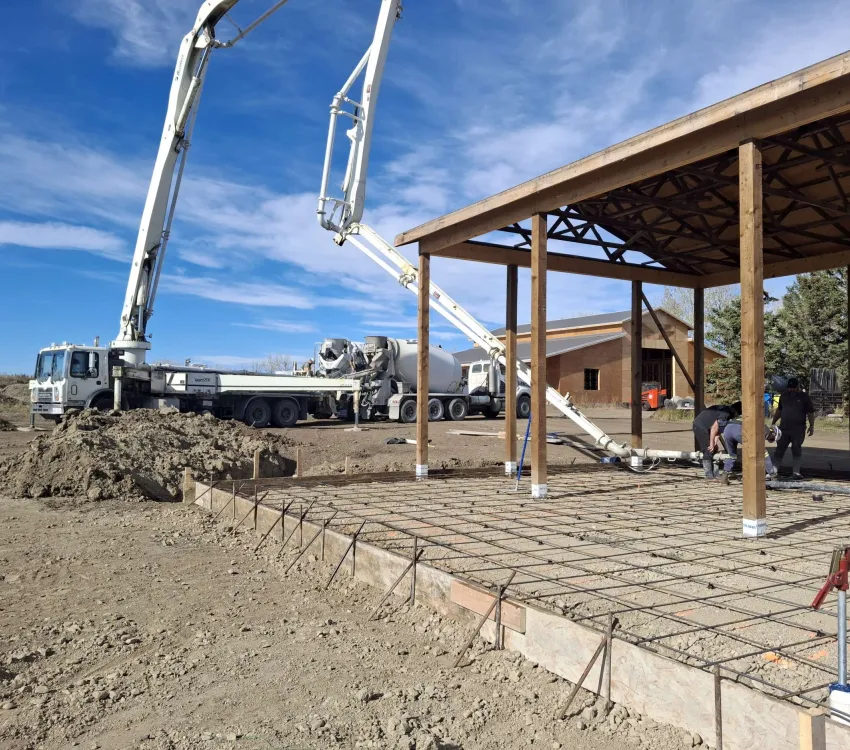
Subgrade preparation Calgary is the foundation of every durable concrete project. Concrete failures are often blamed on poor finishing or mix design, but in reality, most problems, including cracking, curling, settlement, or edge failure, originate beneath the slab. Concrete is rigid, so it cannot compensate for movement in the soil below. Even the highest quality mix or reinforcement will reflect any instability in the subgrade.

A modest residential mix poured on a stable, well-prepared base often outperforms high-strength concrete over uneven or poorly compacted subgrade. While subgrade preparation is not glamorous, it sets the stage for your concrete’s performance in the decades to follow.

Some contractors believe reinforcing steel can compensate for a subgrade that is less than ideal. On the contrary, our experience shows that while reinforcement helps to distribute loads, it cannot prevent curling or edge failures caused by shifting soil.

How Subgrade Conditions Affect Concrete Lifespan

The subgrade is your slab’s silent partner. Its role is simple: provide uniform, stable support. Signs of improper subgrade prep include:

  • Settlement and differential movement
  • Random cracking unrelated to joint layout
  • Slab curling or rocking
  • Edge and corner failure
  • Water-related damage over time

Most of these issues develop gradually as soil consolidates, erodes, or expands with moisture. By the time cracks appear, correcting the underlying issue is expensive and disruptive. 

Failing to also  account for subgrade soil stiffness and moisture content  dramatically reduces the durability and service life of concrete. 

Common Subgrade Problems in Residential and Light Commercial Concrete

In residential construction especially, subgrade issues are often ignored,  often due to scheduling pressures and budget constraints. To ensure we remain on budget for our clients with no surprise costs, and that their concrete is durable, we always account for the costs involved in proper subgrade preparation. 

Best Practices for Subgrade Preparation in Calgary Concrete Projects

1. Treat Subgrade as Structural, Not Temporary

Excellent subgrade prep entails evaluating soil conditions*, an eye for identifying  areas needing extra attention, proper compaction equipment, and refusing to pour on top of questionable base conditions. 

*The necessity in understanding local soil conditions to proper subgrade is one reason why experts recommend choosing an experienced local Calgary Concrete Contractor to ensure the subgrade is prepared according to local soils, climate, and load expectations.

2. Remove Unsuitable Material Completely

Apart from the above, one of the most important steps in subgrade preparation is knowing what not to build on. Soft soil, organic matter, or uncontrolled fill should always be completely removed — never just buried. While it may save time, leaving unsuitable material in place almost always results in uneven settlement and slab failure.

3. Use Proper Base Material

Replacing unsuitable soil with a well-graded, granular base significantly improves load distribution and drainage. A good base material should compact uniformly, resist moisture-related movement, and provide consistent support to the entirety of the slab. Consider also your base thickness relative to the expected loads. Heavy vehicles and equipment for example will require a thicker, more robust base to prevent stress failures.

4. Compact in Controlled Lifts

Compaction is often rushed, or assumed sufficient, in subgrade prep. Appropriate compaction is a detailed process that necessitates: a) placing fill in manageable lifts, b) using appropriate compaction equipment, such as high-density plate compactors, c) verifying density rather than assuming it. Over-compacting or under-compacting can both create problems. Consistent, even compaction is what prevents future settlement.

5. Evaluate Drainage Before the Pour

Water can undermine the subgrade more than any other factor. We recommend contractors evaluate: 1) drainage patterns on the surface, 2) downspout discharge locations, 3) whether there’s potential for water to collect beneath slabs, and 4) whether the ground slopes toward or away from surrounding structures.

Some contractors mainly rely on slab thickness to resist water effects, but our experience shows that proper subgrade drainage is far more effective and cost-efficient over the long term.

6. Finally, Anticipate Real-World Loads

As touched on earlier, you’ll want to ask yourself how the concrete will actually be used: What amount and distribution of weight will it be subject to over time? For instance, will there be frequent delivery trucks or equipment lifts? Will there be concentrated loads at the edges and/or transitions? Preparing the subgrade with these factors  in mind is important in preventing localized settlement and edge failure later on. Even small miscalculations can compromise decades of slab performance.

Subgrade preparation Calgary is essential when planning for real-world loading conditions, especially on residential driveways, commercial pads, or industrial floors.

Invest Now, Save Later

Skipping steps in subgrade preparation may save on time and costs, but it almost always shortens the life of the concrete. Once a slab is placed, subgrade problems are difficult, and expensive, to correct.

Concrete longevity is not just determined by reinforcement technique, plasticizer choice, or surface finish. It’s also incredibly dependent on its foundation – how well the slab will be supported for the rest of its life.

Proper subgrade preparation is one of the most important—and overlooked—ways a contractor can extend the lifespan of concrete. When soil conditions, compaction, drainage, and load expectations are handled correctly, concrete performs the way it was always meant to: predictably, durably, and for decades.

Partner with Calgary Concrete Experts

At Pittman Concrete, our Calgary contractors specialize as a Concrete Company in Calgary, managing residential and commercial projects from start to finish.  We have 28 years’ experience in managing residential and commercial/industrial projects – carrying them from start-to-finish. We account for proper subgrade preparation in all our estimates to ensure your project is delivered on budget, on time, and remains strong. Request your free quote today.

Request your  free quote today.

Leave a Comment

Your email address will not be published. Required fields are marked *